Ever wondered about that iconic tree with the vibrant fall colors and sweet sap? We’re talking about the Sugar Maple, a real gem in North American forests. Identifying sugar maple trees is pretty straightforward once you know what to look for. From its distinctive leaves and bark to its unique seeds, this tree has a lot of character. Let’s break down the features that make the Sugar Maple stand out, no matter the season.
Identifying Sugar Maple Trees By Their Leaves
When you’re out trying to figure out if you’ve found a sugar maple tree, the leaves are usually your first big clue. They’re pretty distinctive if you know what to look for.
Leaf Shape and Lobes
The leaves on a sugar maple are classic maple leaves, you know, the kind you see on Canadian flags, but a bit more subtle. They’re typically about 3 to 5 inches wide and have about five lobes. These lobes aren’t super deep, and the edges between the points are usually smooth, not jagged. The sinuses, or the dips between the lobes, are rounded, not sharp. The overall shape is palmately lobed, meaning the lobes spread out from a central point like fingers on a hand. This shape is a big part of sugar maple tree identification.
Leaf Coloration Through Seasons
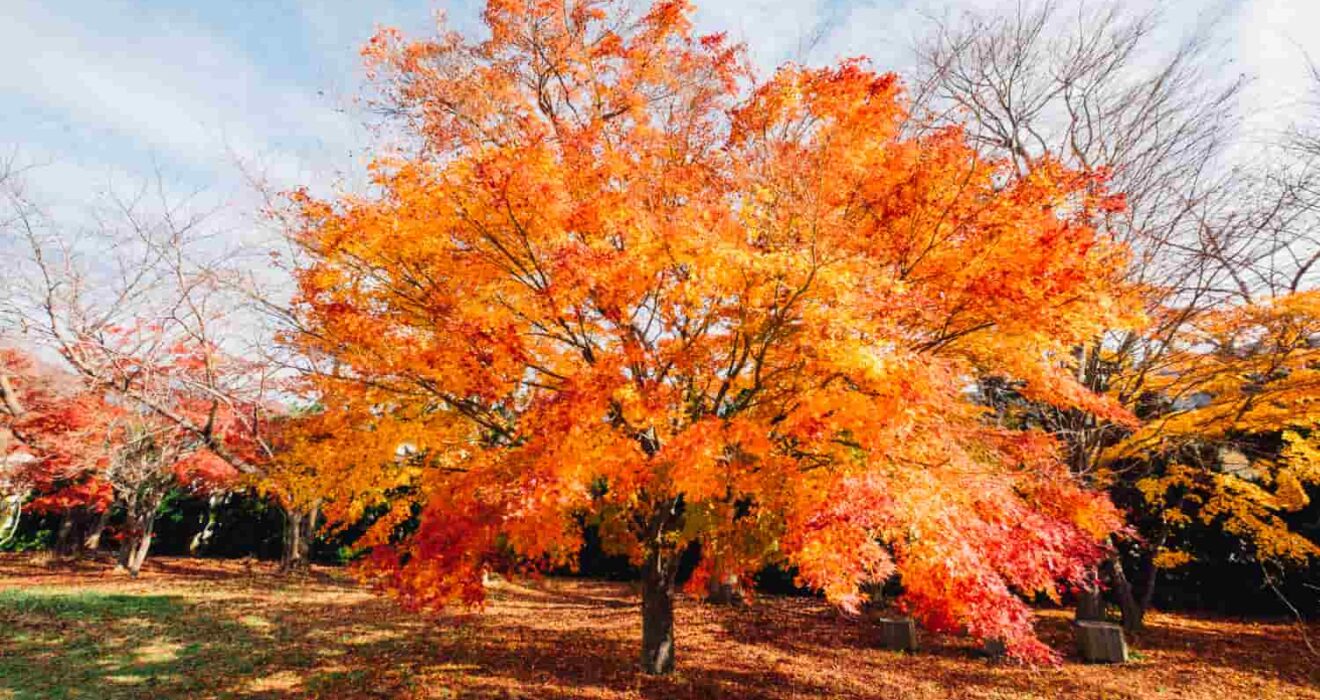
Sugar maple leaves put on a real show throughout the year. In the spring, when they first unfurl, they’re a lighter, almost translucent green. As summer rolls in, they darken to a rich, deep green. This is when they’re working hard, soaking up sunlight. But the real magic happens in the fall. They transform into a stunning display of yellows, oranges, and fiery reds. It’s this vibrant autumn color that makes them so famous.
Leaf Size and Texture
These leaves aren’t tiny; they’re a good size, usually between 3 and 5 inches across. The texture is generally smooth, and you can often see prominent veins running through them. When you hold one, it feels sturdy, not flimsy. The leaf stalk, or petiole, is usually about the same length as the leaf blade itself, or sometimes a bit shorter. It’s this combination of size, shape, and seasonal color that really helps nail down the sugar maple tree identification.
The leaves are arranged opposite each other on the stem, a common trait for maples, and this arrangement contributes to the tree’s symmetrical appearance.
Here’s a quick rundown:
- Lobes: Typically 5, with rounded sinuses.
- Edges: Smooth between the lobe points.
- Size: 3-5 inches wide.
- Arrangement: Opposite on the stem.
- Color: Dark green in summer, brilliant in fall.
Understanding Sugar Maple Bark Characteristics
Bark Texture on Young Trees
When sugar maples are just starting out, their bark is pretty smooth and a dark gray color. It’s tight against the trunk, showing off that youthful, unblemished look. You won’t see much texture here, just a solid, firm surface that hints at the strength to come. It’s a stark contrast to what you’ll see on older trees, almost like a blank canvas waiting for the years to paint their story.
Mature Bark Features
As a sugar maple gets older, its bark really starts to show its age and character. It gets rougher, developing deep grooves that run up and down the trunk. These furrows often break into long, irregular plates that lift away from the trunk at one edge, giving it a shaggy or braided appearance. It’s this texture that makes mature sugar maples so distinctive. The bark darkens with age, and you might even find mosses and lichens taking root in the nooks and crannies, adding even more visual interest. It’s like the tree is wearing a coat of history.
Distinguishing From Other Maples
Spotting a sugar maple by its bark means knowing what to look for, especially when you compare it to other maples. For instance, the silver maple has bark that peels off in long, thin strips, which is quite different from the platy, furrowed look of the sugar maple. Red maples, on the other hand, tend to have smoother bark for longer, and when they do develop furrows, they’re usually not as deep or as plate-like as those on a mature sugar maple.
Here’s a quick rundown:
- Sugar Maple: Deep furrows, long irregular plates lifting at the edge, shaggy or braided look on mature trees.
- Silver Maple: Bark peels in long, thin strips, especially on older trees.
- Red Maple: Smoother bark for a longer time; furrows, when present, are less dramatic and not typically platy.
Paying attention to these bark details can really help you tell your maples apart, especially when the leaves aren’t around for identification.
Sugar Maple Seeds and Reproductive Structures
Sugar maples have a pretty neat way of making more trees. It all starts with their flowers, which are usually a greenish-yellow color. You’ll often see them popping out in early spring, sometimes even before the leaves have fully unfurled. These trees are what we call monoecious, meaning one tree has both male and female flowers. The male flowers are busy making pollen, and the female flowers, well, they’re waiting to get pollinated so they can turn into those classic maple seeds.
Samara Description and Dispersal
The fruits of the sugar maple are probably what most people think of when they picture maple seeds – those little “helicopters” we all played with as kids. They’re technically called samaras, and they usually come in pairs. Each one has a small seed at one end and a papery wing attached. This wing is perfectly designed to catch the wind, letting the seed spin and travel away from the parent tree. They start out green and then, as late summer rolls around, they turn a tan or light brown color. Once they’re ripe, they detach and float off to find a spot to grow. This wind dispersal is a really effective way for sugar maples to spread out across the landscape. It’s pretty amazing how nature figured out this spinning seed trick!
Here’s a quick look at how they develop:
- Bud Swell: Happens in early spring.
- Flowering: Tiny greenish-yellow flowers appear, often before leaves fully emerge.
- Pollination: Wind carries pollen between male and female flowers.
- Fruit Development: Fertilized flowers develop into paired samaras.
- Ripening: Samaras mature from green to tan/brown in late summer.
- Dispersal: Seeds are released and carried by wind in late summer/early fall.
Flower Characteristics
Don’t expect big, showy blossoms from sugar maples. Their flowers are quite small and tend to be a pale greenish-yellow. They appear in drooping clusters, usually about 1 to 2.5 inches long. The timing is key – they often bloom right around the time the leaves are starting to come out in the spring. While they might not be the most eye-catching flowers in the forest, they’re really important for the tree’s reproduction and provide an early food source for pollinators like bees.
Monoecious Nature of the Tree
As mentioned, sugar maples are monoecious. This means that a single sugar maple tree will have both male and female flowers. They aren’t on separate trees like some plants. Instead, you’ll find both types of flowers on the same individual tree, though they might be in different clusters. This setup makes pollination pretty straightforward for the tree, as the pollen doesn’t have to travel far to find a receptive female flower on the same plant. It’s a common and efficient reproductive strategy for many plants, including our beloved sugar maple.
The paired samaras, with their distinctive wings, are a marvel of natural engineering, designed for efficient wind dispersal. This mechanism is vital for the sugar maple’s ability to colonize new areas and maintain its presence in diverse forest ecosystems. The process begins with inconspicuous flowers in spring and culminates in the familiar spinning seeds of autumn, a cycle that has repeated for centuries.
Sugar maples typically start producing significant amounts of seeds after they reach about 30 to 40 years of age. So, while you might see samaras on younger trees, the really abundant crops usually come from more mature specimens. It’s a long game for these trees, but their wind-dispersed seeds are a testament to their successful reproductive strategy.
Observing Sugar Maple Twigs and Branches
Twig Color and Bud Appearance
When you look closely at a sugar maple, especially when it’s bare in winter, the twigs tell their own story. In their first year, these twigs are usually a smooth, reddish-brown color. They’re pretty slender, not thick or chunky at all. What’s really neat is how they end. They typically have pairs of buds that are sharply pointed, almost like tiny spears. These buds are tucked away neatly, covered by overlapping scales that stay shut tight until spring rolls around. These pointed buds are a key feature for identifying sugar maples, especially when you can’t see the leaves. If you were to gently bend one of these young twigs, you’d find it has a good amount of flexibility, a sign that life is still active just beneath the surface.
Branching Patterns and Crown Shape
As the sugar maple grows older, those initial slender twigs develop into more substantial limbs. These branches grow in an opposite pattern, meaning they emerge directly across from each other on the main stem. This is a classic maple trait. This opposite branching is what gives the sugar maple its characteristic dense and symmetrical crown. Over time, it forms a wide, rounded canopy that’s both beautiful and functional, providing ample shade. It’s this structure that makes the tree such a reliable provider of shade on a hot summer day.
Winter Branch Structure
Once the leaves have fallen, the underlying structure of the sugar maple becomes clear. The branches and twigs create a kind of skeletal outline against the sky. They look almost sculptural, with lines extending from the trunk outwards. These limbs aren’t just for show, though. They’re the tree’s plumbing system, moving water and nutrients all the way from the roots to the very tips. As the tree ages, lower branches might naturally die off, while the upper ones keep reaching for sunlight. This constant adjustment in the branch system shapes the tree’s refined outline and also creates important spaces for birds to perch and squirrels to scamper through.
The way branches grow in pairs, directly across from each other, is a defining characteristic of maples. This pattern contributes significantly to the tree’s overall shape and density, creating that familiar rounded canopy.
Seasonal Changes in Sugar Maple Trees
Spring Growth and Sap Flow
As winter loosens its grip, the sugar maple starts its yearly revival. You’ll notice the buds on its twigs begin to swell, a sure sign that warmer days are ahead. Around this time, usually late March to May depending on where you are, the tree puts out its flowers. They’re small and greenish-yellow, often appearing just as the leaves start to unfurl. This is also when the famous sap flow happens. When daytime temperatures climb above freezing and nights stay cold, the tree’s sap starts moving upwards, making it the perfect time for tapping to collect the sugary liquid that eventually becomes maple syrup. Soon after, the new leaves emerge, giving the whole canopy a fresh, vibrant green look.
Summer Foliage and Shade
Come summer, the sugar maple is in its full glory. Its leaves are a deep, rich green, working hard to capture sunlight for photosynthesis. If you’ve ever stood under a mature sugar maple on a hot day, you know how wonderful its shade is. It creates a cool, dappled microclimate beneath the branches, a welcome relief from the sun. The leaves rustle gently in the breeze, making a soft, whispering sound that’s quite peaceful.
Autumn Color Spectacle
This is when the sugar maple truly puts on a show. As the days get shorter and the air cooler, the green chlorophyll in the leaves breaks down. This reveals the other colors that have been there all along – yellows, oranges, and fiery reds. It’s a breathtaking display, with vibrant hues often appearing on the same tree, sometimes even on the same branch. This spectacular color change is a major draw for people who love to see fall foliage. The leaves eventually fall, blanketing the ground in a thick layer of crunchy material that slowly decomposes, adding nutrients back to the soil for the next growing season.
Winter Dormancy Features
Once the leaves have dropped, the sugar maple enters its dormant phase for the winter. The tree appears stark and bare, but its pointed buds are tightly closed, holding the promise of spring. This period of rest is important for the tree’s survival in colder climates. The buds remain protected until the conditions are right for them to open and begin the cycle anew. It’s a quiet time for the tree, a period of rest before the energy of spring returns.
Wrapping It Up
So, there you have it. The sugar maple is a pretty neat tree, right? From its distinct leaves that turn those amazing colors in the fall, to its rough, textured bark that tells a story of years gone by, and those little winged seeds that fly off to start new trees – it’s got a lot going on. It’s not just a tree; it’s a whole ecosystem and a part of our history, giving us shade, syrup, and beautiful sights. Pretty cool when you think about it.
Call Haliburton Tree Care today at +1 705-457-7199 for professional tree services, inspections, and reliable local support.
Frequently Asked Questions
What makes sugar maple leaves so special?
Sugar maple leaves are famous for their classic shape, with five points that look like fingers. In the spring, they start out a soft, light green and grow into a deep, rich green during the summer, providing cool shade. But their real showstopper is in the fall when they turn brilliant shades of yellow, orange, and red, making them a favorite for leaf-peeping.
How can I tell a sugar maple tree by its bark?
Young sugar maples have smooth, dark gray bark. As the tree gets older, the bark becomes rougher, with deep grooves and plates that start to peel away at the edges, giving it a textured, almost braided look. It’s different from the bark of a silver maple, which peels off more easily in strips.
What are those little winged things that fall from sugar maples?
Those are called samaras, and they are the seeds of the sugar maple tree. They grow in pairs, each with a small seed attached to a paper-like wing. When they fall, they spin like tiny helicopters, which helps them spread far and wide on the wind.
Do sugar maples have flowers?
Yes, sugar maples do have flowers, but they are small and greenish-yellow. They usually appear in drooping clusters in the early spring, often before the leaves are fully out. The tree has both male and female flowers on the same plant.
Why is sugar maple sap important?
The sap from sugar maple trees is what we boil down to make delicious maple syrup! In late winter and early spring, when the weather warms up during the day but stays cold at night, the sap starts to flow. It takes about 40 gallons of sap to make just one gallon of syrup, which shows how special this sweet treat is.
How do sugar maple branches grow?
Sugar maple branches grow in an opposite pattern, meaning they grow directly across from each other on the trunk. This creates a nicely shaped, rounded crown. As the tree gets older, lower branches might fall off, and the upper branches stretch towards the sun, giving the tree its distinctive form.