You might think your trees are just part of the scenery, adding beauty and shade to your yard. But sometimes, trees can hide problems that aren’t obvious at first glance. One of these issues involves how the main trunks grow. We’re talking about codominant tree trunks, and while they might look normal, they can actually be a hidden danger you shouldn’t ignore. Let’s break down what these are and why they matter for your home’s safety.
What Are Codominant Tree Trunks?
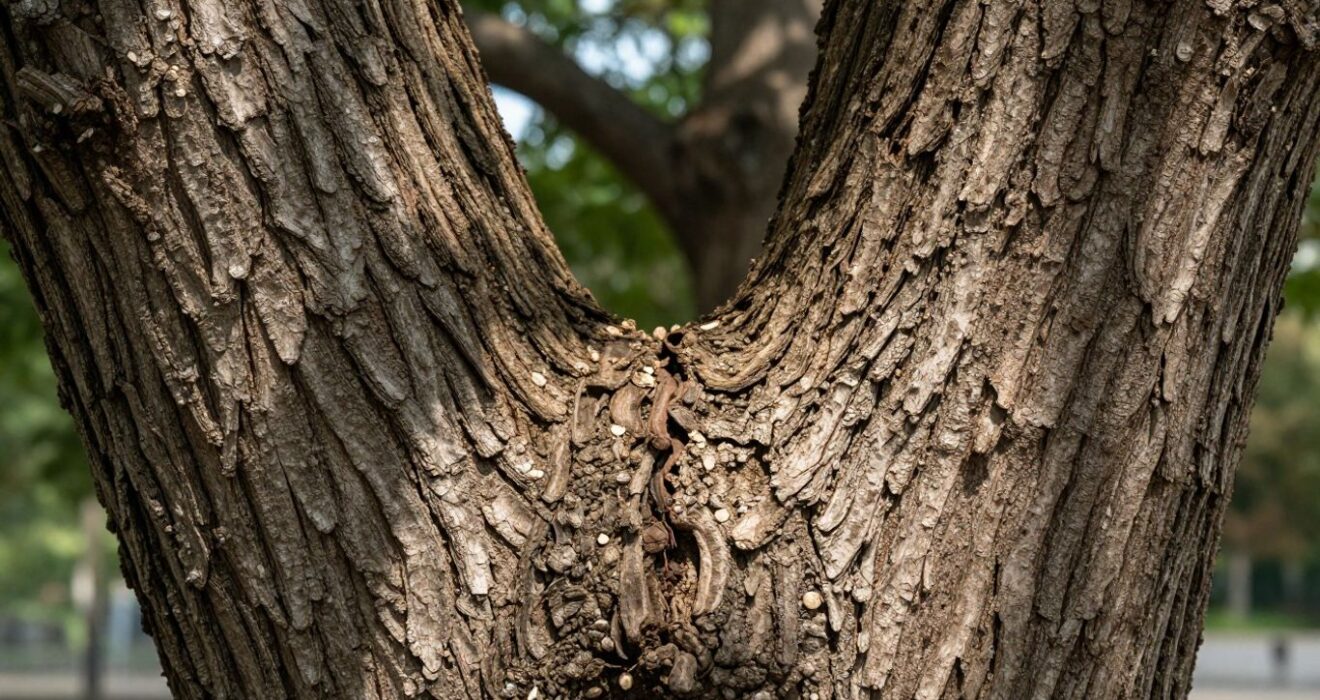
Codominant tree trunks show up when two main stems grow upward together from the same spot on a tree. This type of growth often creates what’s called a tree V shape trunk, where the two trunks meet at a tight angle rather than a wide, sturdy fork. Instead of having a single main trunk supporting the whole tree, you end up with two rivals, each competing for space and sunlight. This odd competition can lead to serious structural problems as years go by.
Here’s how you can spot codominant tree trunks:
- Two main stems about the same size coming out from the same point
- The V shape between the trunks is narrow rather than broad
- The bark between the trunks is squeezed together, often looking pinched or folded
With codominant growth, the connection between the trunks is usually weak. Unlike normal growth, where side branches are attached solidly with strong wood overlap, the bark at the meeting point of codominant trunks often grows inward, not fusing into healthy wood. That makes it harder for the tree to support heavy limbs or survive rough weather. Understanding this difference might save you from serious property damage down the line.
Why Codominant Tree Trunks Are Dangerous
You might think a tree with two main trunks looks kind of cool, maybe even majestic. And sure, sometimes it’s totally fine. But often, these codominant trunks create a hidden problem that can turn your beautiful tree into a serious hazard. The main issue is how these two trunks grow together. Instead of one strong central leader, you have two competing trunks that often form a weak union.
Weak Attachment Point
This is where things get dicey. Where the two trunks meet, the wood fibers don’t always connect as strongly as they do in a tree with a single, dominant trunk. Think of it like two arms trying to hold up a heavy weight together – if they aren’t perfectly aligned and strong, one might give out. This weak attachment point is a prime spot for trouble, especially when the tree is under stress. It’s a common reason for the risk of tree trunk splitting.
Included Bark Formation
Another problem that pops up at these codominant junctions is something called included bark. Basically, instead of bark growing outward, it can get pushed inward between the two trunks. This trapped bark doesn’t have the strength of solid wood. It creates a soft, weak area that’s much more prone to decay and splitting. It’s like having a weak seam in a piece of fabric – it’s the first place to tear.
Higher Risk of Splitting in Storms
When wind, rain, or snow piles on, trees with codominant trunks are at a much higher risk of splitting apart. That weak attachment point, combined with any included bark, just can’t handle the extra pressure. A big gust of wind or a heavy load of ice can be enough to cause a catastrophic failure. It’s not uncommon for these trees to split right down the middle during severe weather, leading to significant damage or injury. It’s a risk that many homeowners overlook until it’s too late.
Signs Your Tree Has a Codominant Trunk Problem
Spotting a codominant trunk issue before it becomes a major problem is key to keeping your trees and property safe. Sometimes, these trees look perfectly fine from a distance, but up close, there are a few things to watch out for.
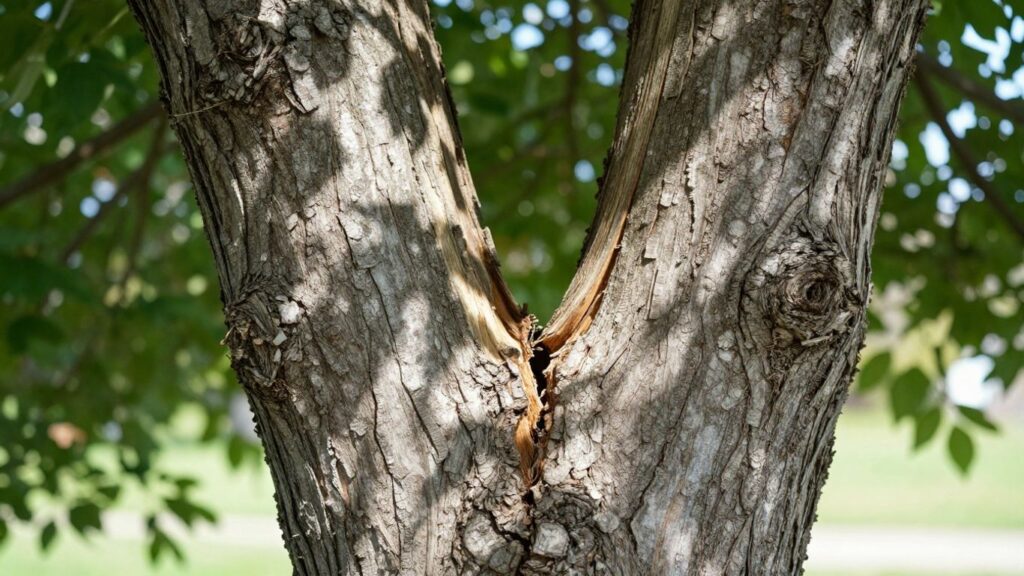
One of the most obvious signs is how the trunks meet. Look for a narrow angle where the two trunks join. This tight “V” shape is a red flag because it often means included bark is forming. Included bark is essentially bark that gets trapped between the two trunks as they grow. It’s weaker than solid wood and can’t hold the trunks together as well.
Here are some other things to keep an eye on:
- Cracks or Splits: You might see cracks, especially near the base where the trunks meet, or even small splits starting to form. These can get worse over time, particularly during bad weather.
- Unusual Bark Patterns: Look for bark that seems to be growing inward or is pinched at the junction. Sometimes, the bark might look uneven or damaged right where the trunks split off.
- Weak Branch Attachments: Even on the branches themselves, check how they’re attached to the main trunks. If you see narrow angles or bark trapped there, it’s a similar issue to the trunk junction.
- Visible Decay: Any signs of rot, fungus, or soft spots around the base or where the trunks meet are serious. This indicates the wood is weakening.
It’s easy to miss these details if you’re not looking closely. A tree that’s growing outwards from its original stem, increasing its overall size and reach, might seem healthy, but the internal structure could be compromised by codominant tree growth.
If you notice any of these indicators, it’s a good idea to get a professional opinion. They can tell you for sure if the tree is at risk and what can be done about it.
Trees Most Commonly Affected by Codominant Growth
While codominant trunks can pop up on just about any tree species, some seem to be a bit more prone to developing this structural issue. You’ll often see this problem with trees that have a naturally upright growth habit, especially when they’re younger.
Some common culprits include:
- Maples: Many maple varieties, like Red Maples and Silver Maples, are notorious for developing codominant stems. Their fast growth can sometimes lead to weaker attachments.
- Oaks: While generally sturdy, certain oak species can also form codominant trunks, particularly when young and competing for light.
- Lindens (Basswood): These trees can sometimes develop multiple leaders that compete, leading to codominant situations.
- Poplars and Aspens: Known for their rapid growth, these species can be more susceptible to splitting when codominant trunks form.
- Elms: American Elms, especially those that have recovered from Dutch Elm Disease or have been pruned improperly, can sometimes develop codominant issues.
It’s not just about the species, though. Environmental factors play a big role too. Trees grown in open areas with plenty of sunlight often develop more upright, competing leaders compared to those growing in a crowded forest where they’re forced to grow taller and straighter.
Can Codominant Tree Trunks Be Fixed?
So, you’ve spotted those two trunks growing side-by-side, and you’re wondering if it’s a ticking time bomb or something you can manage. The short answer is, it depends. While you can’t exactly ‘fix’ the genetic predisposition for codominant growth, there are definitely ways to manage the risks and improve the tree’s structural integrity.
The goal isn’t to eliminate the codominant growth, but to mitigate the inherent weaknesses. This often involves a combination of careful pruning and, in some cases, structural support.
Here’s a breakdown of what can be done:
- Pruning: This is your primary tool. The idea is to favor one trunk over the other, essentially training the tree to develop a stronger, more dominant leader. This involves removing smaller, weaker branches or even entire smaller trunks when the tree is young. For established trees, selective pruning can help reduce the weight on the weaker side of the union and improve air circulation, which helps prevent decay.
- Cabling and Bracing: For larger, more mature trees where pruning alone isn’t enough, professionals can install cables and braces. Cables are typically installed high in the canopy to support the weight of the limbs, while braces are used lower down to prevent splitting at the trunk. This is a more involved process and should always be done by a certified arborist.
- Monitoring: Even with interventions, regular check-ups are key. You’ll want to keep an eye out for any signs of stress, decay, or new cracks forming. This is part of how to identify weak tree unions and address potential tree limb attachment problems before they become serious.
It’s important to understand that these interventions are about managing risk, not creating a perfect, hazard-free tree. The underlying issue of how to identify weak tree unions and preventing tree branch failure is always present to some degree with codominant stems.
Ultimately, the decision to intervene depends on the tree’s species, age, health, location, and the severity of the codominant growth. A professional arborist can assess these factors and recommend the most appropriate course of action to help prevent tree branch failure.
Codominant Tree Trunks vs Normal Tree Growth
When we talk about trees, most of us picture a single, strong trunk rising up and then branching out. That’s what we usually think of as normal growth. But then there are trees with codominant trunks, which look a bit different. Instead of one main trunk, these trees have two or more trunks that are roughly the same size, growing right from the base or very close to it.
The key difference lies in how they develop and their inherent structural integrity. A tree with a single, dominant trunk typically has a more robust and stable structure. The weight and stress are distributed more evenly down that main support. Think of it like a single, thick pillar holding up a roof versus two thinner pillars that might not be perfectly aligned or as strong individually.
Here’s a quick breakdown:
- Normal Growth: One main trunk, strong central leader, weight distributed down a single point. Generally more stable and less prone to splitting.
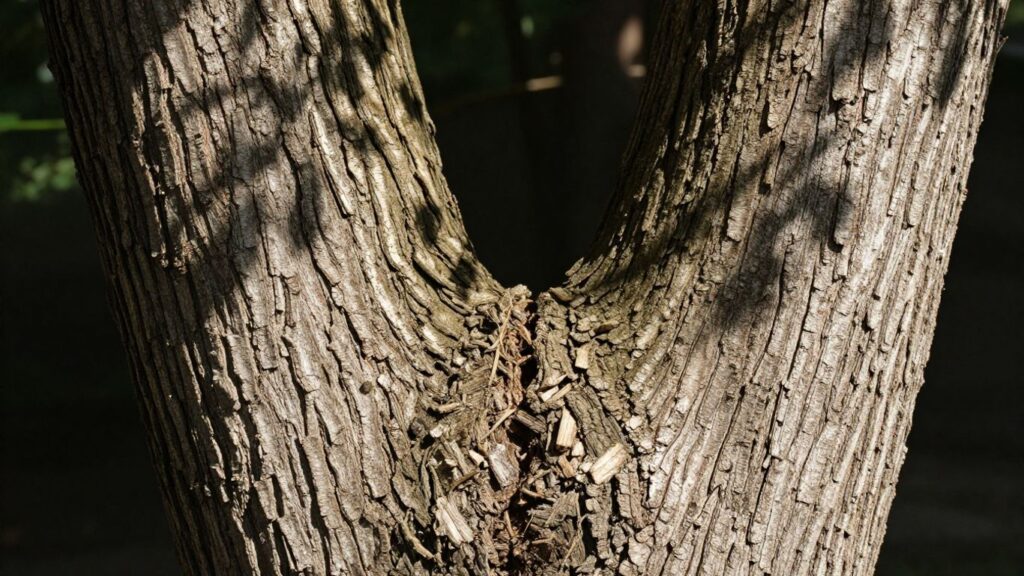
- Codominant Growth: Two or more trunks of similar size originating close together. This creates a weaker attachment point where the trunks meet.
This difference isn’t just about looks; it’s about how the tree handles stress. In normal growth, the tree naturally prioritizes one trunk, which becomes the main support. With codominant trunks, there’s often a competition for resources and dominance, which can lead to issues like included bark. This is where bark gets trapped between the two trunks as they grow, creating a weak spot. It’s like a poorly made joint in construction – it looks okay from the outside, but it’s not as strong as it should be. This is why trees with codominant trunks are more susceptible to splitting, especially during storms or high winds. You can often see this weakness as a “V” shape where the trunks meet, rather than a more rounded “U” shape you’d see with a strong branch attachment. If you’re concerned about the health and stability of your trees, getting a professional tree risk assessment is a smart move.
Why Winter Makes Codominant Trees More Dangerous
When winter hits, codominant tree trunks often go from a hidden worry you can ignore to a real problem right in your backyard. The cold season adds new stresses to trees that already have weak points from having two trunks joined together. It’s not just about the snow; fluctuating temperatures and winter storms really put these trees to the test.
Here’s why things get risky:
- Heavy, wet snow and ice build up in the crotch where the trunks meet, increasing the chance of a sudden split.
- Freezing temperatures cause water inside the tree’s cells to expand and contract. This puts even more strain on old cracks or included bark.
- Winds from winter storms test weak attachments, especially when the tree is already brittle from the cold.
If you’ve got a codominant trunk, these risks aren’t just about a little damage as some tree disease guides point out, a break can mean a dangerous fall or even total trunk failure.
| Winter Factor | How It Worsens Codominant Trunks |
|---|---|
| Ice or Snow Load | Adds excess weight, making splits more likely |
| Freeze-Thaw Cycles | Expands existing cracks and weak spots |
| High Winds | Exposes hidden weaknesses in the trunk unions |
When to Call a Professional
If you’ve spotted a codominant trunk on your tree, it’s pretty tempting to ignore it, especially if nothing seems wrong on the outside. But sometimes trouble is hiding just below the surface. Calling a professional arborist isn’t something you should save for when a tree is already falling apart.
So when is it actually time to pick up the phone?
- You notice cracks in the area where two trunks meet, or the bark looks pinched and folded.
- There’s an obvious lean, sudden limb drop, or signs of exposed roots.
- After heavy wind or storms, you see new splits or the trunk looks different than before.
- You spot signs like sudden dead branches, cavities, or fungal growth that suggest the tree is at risk (Signs of potential tree risk).
- Any part of the tree is close to your house, driveway, or power lines, which raises the danger level instantly.
Honestly, tree risk is one of those things most people miss unless they’re trained to spot it. Trying to fix a codominant trunk yourself can cause more harm improper cuts may weaken the tree or make it unstable. Professionals know how to properly brace trunks, decide if removal is needed, or if structured pruning can help.
When your safety or your property is on the line, a certified arborist’s advice is worth the call. Don’t go it alone.
Conclusion
So, here’s the bottom line: codominant tree trunks might look cool or even go unnoticed, but they’re a real risk you shouldn’t brush off. I know it’s easy to ignore a tree that’s been standing in your yard for years, but those hidden cracks or that odd split could spell trouble—especially when storms roll through. If you spot anything weird, like a sudden lean, a split down the middle, or branches dropping for no reason, don’t wait. Call in a pro. Certified arborists know what to look for and can tell you if your tree is safe or if it needs help. Trust me, it’s way better to catch these problems early than to deal with a fallen tree on your roof. Take a walk around your yard, keep an eye out, and don’t be afraid to ask for expert advice. Your trees and your peace of mind are worth it.
Frequently Asked Questions
What exactly are codominant tree trunks?
Codominant tree trunks are basically two or more main trunks that grow from the same spot on the tree, right near the ground. They look like they’re competing to be the main trunk, and they often grow at sharp angles, which can be a problem.
Why are codominant trunks dangerous?
These types of trunks can be risky because, where they join, the wood might not be very strong. Sometimes, bark can get trapped between them, making the connection even weaker. This makes the tree more likely to split apart, especially during bad weather like strong winds or heavy snow.
How can I tell if my tree has codominant trunks that are a problem?
Look closely at where the main trunks meet. If they form a ‘V’ shape with sharp angles, or if you see bark pushed into the crack between them, that’s a red flag. Also, keep an eye out for any cracks or splits starting to form in that area.
Can a tree with codominant trunks be fixed?
Sometimes, yes. A professional arborist might be able to help by carefully trimming one of the trunks or installing cables to support the weak spot. However, in severe cases, the safest option might be to remove one of the trunks to prevent the whole tree from splitting.
Are some types of trees more likely to have codominant trunks?
Yes, certain trees tend to grow this way more often. Maples, oaks, and lindens are known for developing codominant trunks. It’s good to be extra watchful with these species.
Why are codominant trunks more dangerous in winter?
Winter weather can make codominant trunks even more dangerous. Ice and snow add extra weight to the branches, putting more stress on the already weak connection point. Strong winter winds can also easily cause a split if the trunk union is compromised.